


Monthly Archives

January 2026

Flexible Inheritance Tax Planning

By | Financial Planning

Inheritance Tax (IHT) planning has become an increasingly important part of many long-term financial plans. Rising asset values and static nil rate bands mean that many more estates are becoming liable to IHT, and this trend is set to continue; however, with the right planning, IHT liabilities can be reduced or eliminated. One of the most critical — and sometimes overlooked — aspects of effective IHT planning is to ensure that plans remain flexible. A plan that is efficient today may not remain so in the future, and overly rigid arrangements can quickly become outdated and ineffective.

Legislative change

By retaining flexibility, financial plans can remain effective in the face of evolving family circumstances, fluctuating asset values, and most importantly, changes in legislation. The decision to adjust the reforms to Business Relief and Agricultural Relief, which was announced quietly on 23rd December, is a very recent reminder of the need to remain flexible when planning to reduce or avoid an IHT bill.

In the 2024 Budget, Chancellor Rachel Reeves announced a new combined limit of £1m for assets that qualify for Agricultural Relief and Business Property Relief, scheduled to come into force in April 2026. This represents a notable change to the current position, where there is no limit on which qualifying assets can obtain full relief.

Under the proposals announced in the 2024 Budget, qualifying assets under £1m would continue to benefit from 100% relief from IHT, whilst qualifying assets above this level will only benefit from 50% relief, leaving such assets subject to an effective rate of IHT of 20%.

This was seen as a punitive move for those holding agricultural assets or family businesses and drew widespread criticism. The new £1m allowance would also not be transferable between spouses, which would pose difficulties where assets were held jointly.

In the Budget of November 2025, the proposed rules were tweaked to allow the transfer of allowances between spouses from April 2026. Shortly afterwards, the Government announced a further revision to the rules, increasing the allowance which qualifies for full relief from £1m to £2.5m.

Further upheaval expected

The introduction and revision of the limits to Business and Agricultural Relief are not the only legislative curveball that financial plans will need to negotiate. Unused pension funds will fall within the scope of IHT from April 2027, and individuals holding uncrystallised pensions, or funds in Flexi-Access Drawdown, will need to consider the impact of this change on their IHT position in just over 12 months’ time. Options to mitigate the impact of additional IHT that may become payable include drawing additional funds to either spend or make gifts or arrange non-pension assets in a different structure to reduce the overall impact. As every situation is unique, we strongly recommend that you take independent and tailored advice to ensure that any actions taken do not have unintended consequences.

Changing circumstances

When making financial plans to reduce or avoid an IHT bill on death, it can be easy to forget that our personal and family circumstances often change over time. For example, when gifts are made to the next generation, that “family wealth” could potentially be lost should the recipient of the gift enter divorce. Trusts that name individual beneficiaries may not include the flexibility to include the birth of a new grandchild or great-grandchild. Individuals who make substantial outright gifts may potentially have need of the gifted funds for their own personal use if an unforeseen emergency arises.

Keeping plans flexible allows sensible planning to take place, which can adapt to changes in circumstances.

Fluctuating asset values

It is important to adopt a flexible approach when considering the value of assets that may be liable for IHT. Asset values are rarely static and increases in the value of investments or property could mean that rigid IHT plans are less effective. Likewise, the receipt of an inheritance may push estate values above IHT thresholds and lead to a higher tax liability.

It is not, however, just increases in value that need to be considered. Long-term care, where cumulative costs can run into many hundreds of thousands of pounds, could dramatically reduce the value of an estate, meaning IHT planning undertaken to mitigate a potential issue may not have been necessary.

Retaining control

One of the main barriers to effective IHT planning is the fear of losing control. Understandably, many are reluctant to make large lifetime gifts or enter arrangements that permanently restrict access to capital or income in later life.

Assets that seek to qualify for Business Relief are one potential solution, as these investments allow access to capital should funds be needed for any purpose. Loan Trust arrangements could also be a flexible solution. By loaning rather than gifting funds outright, the loan can be repaid should circumstances change and access to funds is needed. Finally, making regular small gifts to family, rather than large lump sums, can allow the donor to suspend or stop gifting altogether if circumstances change.

A tailored approach

The most effective IHT strategy is often one that employs more than one mitigation tool, and in our experience, a combination of different actions can be both effective and flexible. By use of annual gift exemptions, and making gifts out of surplus income, rising estate values can be kept in check. Combining this with Business Relief investments, Trust planning and possibly protection strategies too, can ensure plans remain flexible to adapt to changing circumstances, whilst offering effective IHT mitigation.

Finding the right combination of strategies, which retains flexibility and provides the necessary tools to mitigate IHT, calls for an individual approach designed to meet your needs, the composition of your assets, and family circumstances. Our experienced advisers can provide bespoke advice on solutions and strategies from across the whole of the market and also review existing arrangements. Speak to one of the team to start a conversation.

Tax efficient retirement income

By | Financial Planning

For many people in retirement, pensions will form the foundation of their income. For those with sufficient qualifying years, the full State Pension now provides an income equivalent to just under £12,000 per annum, and most retirees can access pension income from workplace and personal pensions accrued during their lifetime, which covers the essential costs of living. Pension income alone may, however, leave little spare for discretionary expenditure or unexpected outgoings.

A well-rounded retirement income strategy does not necessarily need to rely on pension income alone to fund retirement. Savings and investments can be used to generate additional income, which is often more tax-efficient and flexible than income from pension sources.

Diversification is important

Some may be tempted to focus on holding their savings exclusively in cash deposits. Whilst cash forms a part of all sensible financial plans, and carries minimal risk, it is important to bear in mind that the level of interest is likely to be modest, and with interest rates set to fall further this year, those relying on savings interest may well see their income fall. Furthermore, cash is fully exposed to the eroding impact of inflation over time.

Property remains a popular source of retirement income for many individuals. Income from rents can provide a stable income stream and may increase with inflation over the long term. Rental income is not, however, tax efficient, as rental profits are subject to income tax and landlords are increasingly finding the burden of regulation more difficult to manage.

Equities (company shares) can provide an attractive and potentially increasing level of dividend income. Stable companies aim to return excess profits to shareholders in the form of dividends, with many global companies producing an increasing level of dividend year on year. It is, however, important to remember that dividend income is not guaranteed, and the capital value of holdings in equities will fluctuate, depending on underlying market conditions.

Corporate and Government Bonds are another way of generating income in retirement. Most fixed interest securities offer a predictable and attractive income stream, and whilst fixed income investments tend to be less volatile than equities, capital values will fluctuate depending on economic factors and bond interest may be at risk, if the financial strength of the bond issuer weakens.

By blending allocations to these asset classes, a diversified investment portfolio can be created, providing an attractive level of income that can supplement pension income, and provide some prospects for capital appreciation, too.

Improved tax-efficiency

Pension income, be it from a workplace pension, Flexi-Access Drawdown or an annuity, is subject to income tax. In contrast, an investment portfolio can be structured to make best use of available tax allowances to create a tax-efficient natural income stream.

Individual Savings Accounts (ISAs) are often the cornerstone of income planning outside of pensions. ISA income is tax-free, and ISAs also provide an additional benefit in that any gains generated on the sale of investments within an ISA are also free from Capital Gains Tax.

Once ISA allowances have been fully used, General Investment Accounts can provide additional investment capacity. While income from these accounts is taxable, most individuals receive a Personal Savings Allowance, which covers up to the first £1,000 of savings income each tax year, and a Dividend Allowance, where the first £500 of dividend income each year is also free from tax. By carefully structuring their assets, a couple could fully use their ISA allowances each tax year and make use of the other available tax allowances to cover savings and dividend income.

Added value through advice

Creating income outside of pensions is not about replacing pension income but strengthening it. By building and managing non-pension assets, those in retirement can reduce reliance on any single source of income and improve long-term financial security. As with all retirement planning, it is vital to ensure that the strategy is tailored to your needs, meets your attitude to risk and is adequately diversified. Our experienced advisers can add significant value by providing independent holistic financial planning advice, and our ongoing review service can help ensure these strategies remain aligned with changing circumstances and objectives.

Introducing CDI High Income

When seeking a high level of natural income, one option is to build a bespoke portfolio, designed to provide an attractive and reliable income stream. Our advisers regularly construct such portfolios for specific client requirements; however, growing demand for a strategy designed to generate a higher level of income has been the catalyst for the CDI High Income portfolio, the newest discretionary portfolio strategy managed by the FAS Investment Committee.

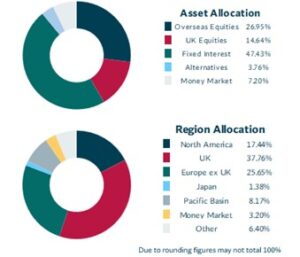
The CDI High Income portfolio has been designed to generate a higher level of natural investment income while still offering the potential for long-term growth. Being defined as medium risk, around 40% of the CDI High Income portfolio will be invested in UK and global companies that can deliver attractive dividends. The remainder is held in a mix of fixed interest securities combining both high-quality and higher-yielding issuers to balance income and risk. As with all CDI portfolios, the FAS Investment Committee review and rebalance the portfolio at least four times a year, considering fund performance, global macro factors, and market outlook.

As of 31st December 2025, the yield on the CDI High Income portfolio stood at an attractive 5.03% per annum, which could make the strategy an ideal option for anyone seeking to generate additional income from savings, as part of a wider strategy. The high natural income also lends itself well to those who wish to generate income for the purpose of making gifts out of surplus income, or for trusts, where a life tenant is seeking a higher level of income.

Speak to one of the team to discuss the CDI High Income discretionary managed portfolio.

The drawbacks of default pension strategies

By | Financial Planning

Most workplace pension accounts are invested in so-called “default” investment strategies. The Pension Provider Survey 2024/5, conducted by the Department for Work and Pensions, reported that around 86% of auto-enrolment pension scheme members are invested in the provider’s default investment approach.

Unless a decision is taken when joining a workplace pension scheme, individuals are automatically placed into a default investment strategy. This is a good idea, as many choose to take no interest in how their pension is invested, and accepting a default strategy ensures that the pension adopts a diversified approach, investing in a range of assets designed for growth over the longer term. This also avoids individuals choosing a very conservative investment approach in their early years, which could potentially lead to a poor outcome.

For those in the early stages of pension saving, with decades before retirement, a default strategy may well be broadly appropriate, as it will provide a high degree of exposure to global equity markets; however, as pension values grow and retirement planning becomes a more important consideration, relying on a default strategy can create unintended risks, missed opportunities and increase the likelihood of underperformance.

Limitations of lifestyling

Most workplace pensions follow a lifestyling or target-date approach. In simple terms, this means investing more heavily in equities during the early years, then gradually switching into bonds and cash as retirement approaches.

The premise of such a strategy is to avoid a “cliff edge” scenario, which could occur if markets fall heavily around the time an individual reaches their normal retirement date. Whilst this is, indeed, sensible, such strategies are often too rigid and fail to consider the need to remain flexible when approaching retirement. Historically, lifestyle strategies were designed around the purchase of an annuity at retirement. Today, many retirees plan to use income drawdown, keeping their pension invested beyond their normal retirement date. For these individuals, reducing growth assets too early can significantly lower long-term income potential. Worse still, automatic de-risking can coincide with market downturns, effectively locking in losses at precisely the wrong moment.

Another common concern raised is the target date set for the lifestyle strategy often coincides with the point at which an individual will begin to receive their State Pension. The default strategy is, therefore, misaligned if the individual chooses to draw their pension at an earlier date.

One size fits all

Default investment strategies are designed to appeal to the average pension saver; however, a single default strategy cannot cater to the diverse needs of pension scheme members, their individual preferences or wider financial circumstances. Some may hold other significant investments, property or business assets, which will provide an income in retirement. Others may have membership of defined benefit pensions, which provide guaranteed income. Holding assets external to the pension may allow a different risk profile to be adopted for the workplace pension.

Ethical preferences cannot easily be accommodated through a default investment approach. NEST, which has over 13 million members, allocates a proportion of their default strategies to climate aware funds. This may not, however, satisfy those who prefer to take a more socially responsible approach to investment. Conversely, given the underperformance of socially responsible investments – when compared to mainstream investment strategies over the last year – investors less concerned with ethical considerations may prefer greater allocations to sectors such as defence, oil and mining, which have outperformed.

Underwhelming performance

We undertake detailed analysis of many hundreds of pension arrangements each year that are held by clients when they approach us for advice. An increasing consensus is emerging, which shows performance from default funds generally falling behind sector averages over the longer term. In the drive to keep costs low, many default investment strategies are now exclusively invested in passive funds, which aim to track a particular index or benchmark. By their very nature, passive funds will only ever track the performance of an index, not beat it. Whilst they are a good way of gaining broad market exposure, focusing on passive investments alone misses out on the potential for outperformance that actively managed strategies can provide.

Further underperformance often becomes apparent as individuals begin to move towards their intended retirement date, where the lifestyle strategy begins to reduce equity exposure and introduce greater allocations to fixed interest securities. Due to the reliance on passive strategies, the fixed income element is often concentrated in longer dated government bonds, which have performed poorly when compared to corporate debt over recent years. Furthermore, the absence of a strategic approach can increase risk, as credit quality and duration are not necessarily adjusted to suit prevailing market conditions.

The importance of advice and review

Pension investments are held for the longer-term, and those entering the workplace today may well be saving for almost 50 years before accessing their pension savings to provide an income in retirement. Over this time, additional performance that could be achieved from a tailored investment approach could lead to a significant difference in pension fund value when reaching retirement.

It is important to seek advice before considering any changes to your pension investment strategy. Our experienced advisers can analyse your existing arrangements and your wider financial objectives, to provide you with tailored, independent advice on an appropriate strategy that meets your goals in retirement. Keeping any strategy under regular review is as important as the initial advice, and our comprehensive ongoing review service aims to ensure that the strategy remains appropriate in light of current and expected market conditions and changes to your circumstances. Speak to one of the team to arrange a review of your existing pensions.

Six Themes for 2026

By | Financial Planning

2025 proved to be another broadly positive year for both equity and bond markets. Global indices closed out the year close to record highs, and investors in fixed income and alternative assets also enjoyed strong returns throughout last year. Despite ending the year in good spirits, prevailing market conditions present a challenging conundrum for investors. We look at six key themes that are set to shape market direction during 2026.

  1. Falling Interest Rates

Base interest rates in the US and UK fell during 2025, with the Federal Reserve lowering rates by 0.75% and the Bank of England Monetary Policy Committee (MPC) going further, reducing base rates by a whole percentage point.

We expect this trend to continue, as slower economic growth and falling inflation support continued central bank easing. The change of leadership at the Federal Reserve in May could herald a more dovish position, with the new Fed Chair expected to be sympathetic to President Trump’s calls for lower interest rates as the US heads into the mid term elections. We expect the Bank of England MPC to take a more cautious approach, reducing rates by up to a further 0.75% by the end of the year. Central banks will, however, need to remain alert for signs that inflation begins to increase once again, which remains a possibility due to the impact of global tariffs.

  1. Increasing Debt

Debt – be it corporate, consumer or government – may well be a key driver of investor sentiment during 2026. Government debt levels continue to spiral, with yields on both UK and US Government bonds remaining elevated. Tech giants, such as Meta, Alphabet and Oracle, have massively increased corporate debt levels to fund Artificial Intelligence (AI) infrastructure. Whilst the increased leverage is necessary for expansion, the pace at which debt levels are rising is concerning, and signs of stress could spread quickly across the sector. Personal debt levels are a further concern, with households borrowing more to cover the elevated costs of housing, food and essentials. Consumer delinquency is rising quickly in the US, with missed payments on car loans hitting the highest level for 15 years at the end of 2025.

  1. Consumer confidence (or lack thereof)

Consumer confidence remained subdued throughout 2025, and this trend is set to continue amidst general pessimism about the state of the UK economy. The UK unemployment rate jumped to 5.1% in the three months to October, which together with the higher overall tax take, are leading households to rein in discretionary spending and be more cautious. Recent surveys have indicated that consumers may be even more cautious in 2026 than they were last year, particularly when considering big ticket items. We expect the gloom to continue to weigh on house prices, which may remain broadly static during 2026, despite the positive influence of falling interest rates.

  1. Testing tech valuations

The second half of 2025 was dominated by the growth in AI and the prospects of future returns from heavy capital expenditure on AI infrastructure. The performance of a handful of global giants, such as Nvidia, Microsoft, Apple and Alphabet, made a significant contribution to returns last year, although valuations are now demanding. Revenue growth from the biggest US tech names will need to continue to outperform to match lofty market expectations, with the risk that disappointment could see significant downside from current levels. Given the representative index weight of the largest US tech stocks, even modest falls from current levels would weigh on index performance.

  1. Focus on quality names.

One trend that may become apparent as we head through 2026 is a further broadening of returns from global equities, where the focus may well shift from global tech giants to high quality, large cap stocks with consistent earnings and lower valuations, offering better value. Lower inflation and anticipated rate cuts may help support the outlook for quality stocks, which may also be less impacted by lower economic growth. Given the expectation of lower returns from global equities during 2026, stocks offering an attractive dividend yield may also be in demand, with total returns from capital and dividend income becoming increasingly valuable.

  1. Continued tariff threat

2025 saw global trade turned on its head by the tariffs introduced by President Trump. As we enter 2026, expect to see further uncertainty as the US Supreme Court rules on the legitimacy of the sweeping tariff announcements. Trump will certainly counter a decision that rules the broad tariffs announced under the International Economic Emergency Powers Act are unlawful, by making use of more targeted tariffs on individual sectors of the economy, which may be time limited.

As the year progresses, we will have a clearer picture of the impact of tariffs on global growth and how companies have dealt with increased costs. Whilst the immediate risk posed by trade tensions may have eased, major question marks remain over negotiations with key trading partners such as China, where tensions could reignite.

Time to review portfolio allocations

After two years of strong returns from both equities and fixed income, 2026 may prove more challenging for investors. As always, nimble investors can continue to seek out good opportunities by careful asset allocation and portfolio positioning. As we enter a new year, this may be a good time to reassess your investment goals for 2026, consider the impact of expected trends on your portfolio, and review existing cash positions in a year when interest rates are likely to fall further.

Our experienced advisers can provide an independent review of your existing arrangements, to consider how you are positioned for the year ahead. Speak to one of the team to start a conversation.